Smoked Salmon Internal Temp: The Safe Temperature Guide for Perfect Results
There’s something magical about the smell of wood chips in your backyard. You might remember your first time cooking a delicate fillet. You hoped it would be buttery and melt in your mouth.
To get professional results at home, you need more than just a guess. Knowing the smoked salmon internal temp is key to a tasty and safe meal. By controlling the heat, you ensure your dish turns out just right.
This guide will give you the knowledge to cook with confidence. We’ll cover the important steps to get the perfect smoked salmon internal temp every time. Let’s make your next cookout a hit.
Table of Contents
Understanding the Science of Smoked Salmon Internal Temp
To truly understand how to make smoked salmon, you must first grasp the unique biology of the fish. Salmon muscle fibers are up to ten times shorter and contain very little connective tissue. This delicate structure makes the fish highly sensitive to heat, meaning it can dry out in a matter of minutes if you are not careful.
Why Temperature Control Matters for Food Safety
Maintaining the correct internal temperature is your primary defense against foodborne illness. When you learn how to make smoked salmon, you discover that hitting the right thermal threshold ensures that harmful bacteria are neutralized. Precision is key, as undercooking leaves risks, while overcooking destroys the quality of the fillet.
You should always aim for a consistent internal temperature to ensure safety without compromising the integrity of the fish. Using a reliable thermometer allows you to track the progress of your smoke accurately. This practice is essential for anyone serious about mastering the craft of home smoking.
The Relationship Between Heat, Texture, and Flavor
The application of heat triggers a transformation in the proteins of the salmon. Because the fish lacks the abundant collagen found in beef or pork, it does not require long, slow breakdown times. Instead, you are managing a delicate balance where heat denatures the proteins just enough to create a buttery, flaky texture.
If the temperature climbs too high, the moisture evaporates rapidly, leaving you with a chalky and dry product. By keeping the heat steady, you preserve the natural oils that give smoked salmon its signature rich flavor. The following table highlights why fish requires a more careful approach than other common proteins.
| Feature | Salmon | Beef/Pork |
|---|---|---|
| Fiber Length | Very Short | Long |
| Connective Tissue | Minimal | Abundant |
| Heat Sensitivity | High | Low |
| Cooking Goal | Preserve Moisture | Break Down Collagen |
Understanding these biological differences is the foundation of how to make smoked salmon that rivals professional deli quality. When you respect the science of the fish, you gain better control over the final result on your plate.
Essential Equipment for Monitoring Your Salmon

Learning how to make smoked salmon shows you why guessing is bad. Guessing by color or texture can lead to bad results or safety issues. To get great results, you need top-notch digital tools.
Choosing the Right Digital Meat Thermometer
A good instant-read digital thermometer is key. It gives quick, precise readings. This lets you check the salmon’s temperature without opening the smoker too much. Choose a thin probe to avoid damaging the salmon.
For those who like to relax, leave-in probe thermometers are great. They let you watch the temperature from afar. Make sure your thermometer can handle a wide range of temperatures and responds fast for accurate readings.
The Importance of Calibration for Accuracy
Even the best thermometers can lose their way over time. Drops or too much heat can mess them up. It’s crucial to calibrate them regularly.
To check your thermometer, use the ice-water method. Fill a glass with ice and water. Put the probe in the middle, avoiding the sides or bottom. A good thermometer will show 32°F (0°C). If it doesn’t, adjust it according to the maker’s guide. This keeps your smoked salmon safe and tasty.
Preparing Your Salmon: Brining and Rubbing Techniques
Getting your salmon ready right is key to a great smoked salmon recipe. It makes sure the fish stays moist and tastes amazing. By preparing it well before smoking, you ensure a top-notch dish.
The Role of Brining in Moisture Retention
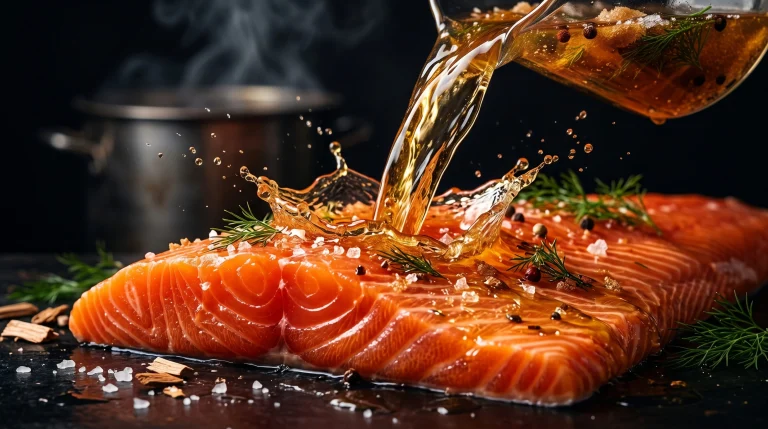
A good smoked salmon brine keeps the fish moist during cooking. The salt in the brine helps the fish hold onto water. This keeps the salmon from drying out in the smoker.
Brining also makes the fish’s surface tacky. This tackiness is crucial because it attracts smoke particles. Without brining, your salmon might not have that deep flavor you’re looking for.
Crafting the Perfect Smoked Salmon Rub
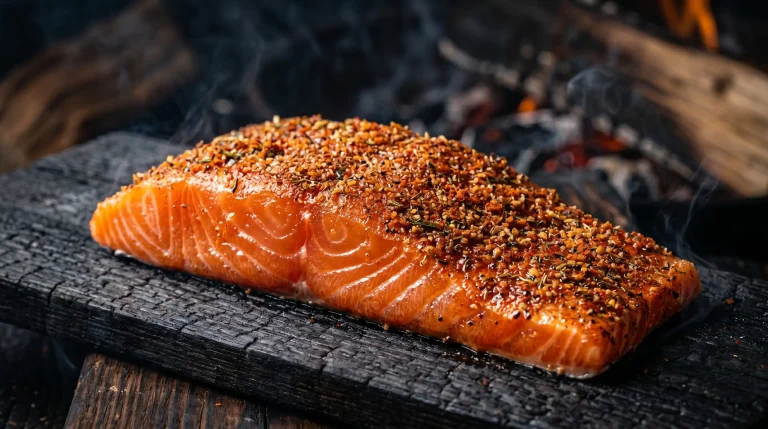
After brining and drying, it’s time for a smoked salmon rub. A great rub has sweet, savory, and spicy flavors. Try mixing brown sugar, black pepper, and dill for a classic taste.
The rub should create a tasty crust outside and a soft inside. Feel free to add ingredients like smoked paprika or garlic powder. A well-made rub turns simple fish into a gourmet dish.
Applying Seasonings for Maximum Flavor Penetration
When applying your smoked salmon rub, be gentle but thorough. Pat the salmon dry first to help the seasonings stick. Press the rub into the flesh to get flavors deep inside.
Let the seasoned fish chill in the fridge for at least an hour before smoking. This lets the flavors soak into the meat evenly. Consistency is key for the best results.
Setting Up Your Smoker for Success
Before you add your smoked salmon rub, make sure your smoker is ready. A good smoke needs a steady environment in your cooking space. This keeps your fish just right in texture and taste.
Selecting the Best Wood Chips for Salmon
Picking the right wood is key for flavor. Go for mild woods that enhance the fish without taking over. Alder is a top pick, and apple or cherry woods add a sweet touch that goes well with a smoked salmon rub.
Maintaining Consistent Ambient Smoker Temperatures
Being consistent is what makes a great smoker. Watch your temperature closely to avoid drying out your fish. Use a digital controller or adjust vents often to keep the heat just right.
Positioning Your Salmon for Even Heat Distribution
Where you place your fillets is crucial for even heat. Don’t overcrowd the grates, as it blocks airflow and causes hot spots. Give each fillet enough space for smoke and heat to reach all sides.
| Wood Type | Flavor Profile | Best Use |
|---|---|---|
| Alder | Neutral and light | Traditional salmon smoking |
| Apple | Sweet and fruity | Adding a mild, sweet finish |
| Cherry | Rich and fruity | Deepening the color and flavor |
| Maple | Sweet and smoky | Balancing salty brines |
The Ideal Smoked Salmon Internal Temp Range
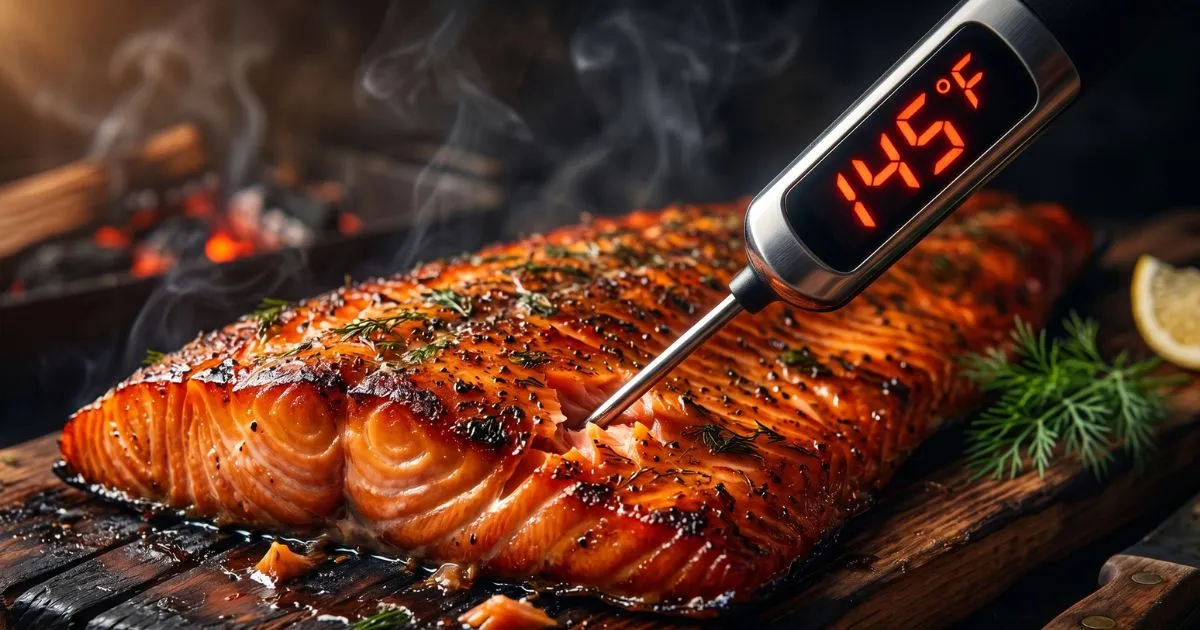
Getting the right smoked salmon internal temp is a mix of cooking skill and food safety knowledge. The FDA says to aim for 145°F for safety. But many prefer to stop at 125°F for a tender, flaky texture.
Targeting the Perfect Doneness for Hot Smoked Salmon
Hot smoked salmon needs to be cooked through but still moist. If it gets too hot, it can dry out. Stopping at 125°F to 130°F keeps it juicy.
Understanding the Difference Between Hot and Cold Smoking
Hot and cold smoking are two different techniques. Hot smoking cooks the fish fully, so you must watch the smoked salmon internal temp closely. Cold smoking, on the other hand, is for curing at low temperatures.
Adjusting Temperatures Based on Salmon Thickness
The thickness of your salmon affects how fast it heats up. Thicker pieces take longer to reach the right smoked salmon internal temp. Always check the thickest part with a thermometer.
Smoking different sized fillets? Group them by thickness. This makes it easier to control the heat and ensures even cooking.
How to Properly Measure Internal Temperature
To get the perfect smoked salmon internal temp, you need more than a good smoker. You also need to measure it right. This ensures the salmon stays moist and tastes great. A thin needle probe is the best tool for this, as it checks the temperature without harming the fish.
Identifying the Thickest Part of the Fillet
Always aim for the thickest part of the salmon to get an accurate reading. This part takes the longest to heat up, making it the best indicator of doneness. By focusing on the center, you keep the edges moist and the middle cooked just right.

Consistency is key when dealing with different fillet sizes. Measuring a thinner section too early can ruin the fish. Always check the fillet visually before inserting your probe to find the deepest point.
Avoiding Bone and Fat Pockets During Measurement
Be careful to steer clear of bones and fat pockets when checking your smoked salmon internal temp. Bones heat up faster than the meat, giving a false reading. Fat pockets also don’t hold heat like muscle, leading to inaccurate data.
If your probe hits a bone, pull it back and try again at a different angle. These small steps help ensure your thermometer shows the fish’s true internal state. Accuracy is the foundation of a safe and tasty smoking experience.
Techniques for Consistent Readings
For the best results, insert your needle probe horizontally through the side of the fillet toward the center. This method reaches the thickest part while keeping the probe stable. Avoid moving the probe too much, as this can let moisture out.
Wait for the digital display to settle before recording your final smoked salmon internal temp. By following these steps, you’ll become a pro at temperature control and get great results every time you smoke.
Managing Heat and Smoke for Texture Control
Your success with any smoked salmon recipe depends on controlling your smoker’s internal environment. Unlike beef or pork, salmon has almost no collagen. This means it can lose moisture quickly if you don’t manage heat and humidity well.
Preventing Overcooking and Dryness
To keep your fillet flaky and moist, avoid high-heat spikes. These can strip away natural oils. A steady, low temperature prevents the exterior from becoming tough or leathery before the center is done. Consistent heat ensures a high-quality result every time.
Using Water Pans to Maintain Humidity
A water pan is a key tool for a humid environment inside the smoker. As water evaporates, it creates a steam barrier. This protects the fish’s delicate proteins. Adding a water pan to your smoked salmon recipe keeps the texture succulent, even in a dry environment.
Monitoring Smoke Density Throughout the Process
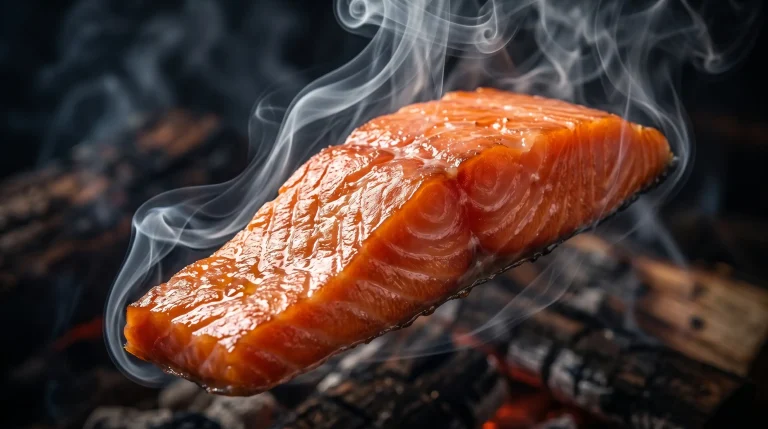
While smoke adds flavor, too much can make the taste bitter. Aim for a thin, blue stream of smoke, not thick, white clouds. Proper airflow ensures the smoke adds a clean, wood-fired essence without overpowering the salmon’s natural sweetness.
| Management Technique | Primary Benefit | Impact on Texture |
|---|---|---|
| Water Pan Usage | Increases Humidity | Prevents Leathery Surface |
| Low Heat Control | Prevents Protein Seizure | Ensures Flaky Consistency |
| Thin Blue Smoke | Balanced Flavor Profile | Maintains Delicate Mouthfeel |
Troubleshooting Common Smoking Issues
Even the most experienced pitmasters sometimes face unexpected challenges while smoking fish. It’s important to stay alert and adjust your plan as needed. By managing these common issues, you can ensure your smoked fish always tastes great.

What to Do If Your Salmon Stalls
A temperature stall happens when the fish’s internal heat stops rising for a while. This is usually because of cooling on the surface. Don’t worry if you see this happen, as it’s a normal part of cooking.
If the stall goes on too long, try slightly increasing the smoker’s temperature. But be careful not to make it too hot, as this can dry out the fish. Being patient is key when dealing with a stall.
Correcting Uneven Cooking Across Multiple Fillets
When smoking several fish at once, some might cook faster than others. This can be due to differences in thickness or how close they are to the heat. Always group similar-sized fillets together to help them cook evenly.
If one side of the smoker is hotter, turn your fillets halfway through. This helps spread the heat evenly. Checking each fillet’s internal temperature is the best way to ensure they’re cooked safely and well.
Handling Unexpected Temperature Spikes
Sudden heat spikes can ruin your smoked salmon rub, making it char or taste bitter. If the temperature jumps, cut down the airflow or adjust your heat source. Keeping the lid closed helps keep the temperature stable.
If the heat stays too high, move the fish to a cooler spot in the smoker. This protects your smoked salmon rub from intense heat. With these steps, you can handle any temperature changes that come your way.
Resting and Cooling Your Smoked Salmon
Creating perfect smoked salmon is more than just smoking the fish. Many beginners miss the crucial final steps. These steps are key to getting the best texture and flavor. Learning how to handle the fish after it’s smoked is essential for making top-notch smoked salmon.
Why Resting is Crucial for Moisture
The fish’s internal temperature will keep rising after it’s removed from the smoker. This is called carryover cooking. So, pull the fillets off when they’re 5°F below your target. Skipping this can make the fish dry and chalky.
Resting lets the juices spread evenly through the meat. Cutting into the fish too soon lets these juices spill out. Letting it rest for 10 to 15 minutes keeps it juicy and tender. This is especially true if you used a great smoked salmon brine at the start.
Proper Cooling Methods Before Refrigeration
After resting, cool the fish before refrigerating it. Hot fish can make the fridge too warm, risking other foods. Here’s how to cool it safely and keep it delicious:
- Place the fillets on a wire rack to allow air to circulate underneath the fish.
- Keep the salmon in a cool, drafty area away from direct sunlight until it reaches room temperature.
- Avoid covering the fish tightly while it is still warm, as trapped steam can ruin the texture.
- Once fully cooled, wrap the fish in parchment paper or plastic wrap to maintain the moisture profile established by your smoked salmon brine.
Managing these final steps is crucial for making great smoked salmon at home. By focusing on rest and cooling, you keep your hard work intact. This ensures your finished fillets are safe, tasty, and ready for storage.
Storage and Food Safety Guidelines
Proper storage is key to keeping your food safe and tasty. Even with a top-notch smoked salmon brine, how you store it affects freshness. Always prioritize hygiene to stop harmful bacteria growth.
Safe Handling Practices After Smoking
After the salmon hits the right temperature, move it to a clean area right away. Don’t use the same boards or tools that touched raw fish. Cross-contamination is a big risk, but easy to avoid with good cleaning.
Let the fish cool down to room temperature before storing it in a sealed container. Keeping it dry helps keep the smoked salmon brine flavors you worked on. Use clean gloves if you’re portioning the fillets.
Refrigeration and Freezing Best Practices
For short-term storage, wrap the salmon tightly in plastic wrap or use an airtight container. Store it in the coldest part of your fridge, below 40°F. For longer storage, freezing is best.
Vacuum sealing prevents freezer burn and keeps the fish’s texture. Remember, sashimi-grade fish is flash-frozen to kill parasites. Always cook fish from unknown sources before storing.
| Storage Method | Temperature | Shelf Life |
|---|---|---|
| Refrigerator | 35°F – 38°F | 5 to 7 Days |
| Standard Freezer | 0°F | 2 to 3 Months |
| Vacuum Sealed | 0°F | 6 Months |
Identifying Signs of Spoilage
Check your smoked salmon before serving it. Trust your senses to judge its quality. If it smells sour or like ammonia, it’s not safe.
Watch for texture changes, like a slimy surface. Any mold or unusual color means it’s spoiled. If unsure, it’s better to throw it away than risk food poisoning.
Conclusion
Learning to cook smoked salmon to the perfect temperature makes your kitchen feel like a pro smokehouse. Now, you can handle delicate fish with ease and skill.
Success in making smoked salmon depends on keeping an eye on the heat. With practice, you’ll get consistent results. This comes from knowing how your equipment works under pressure.
Bring these skills to your next outdoor party to wow your friends with perfectly cooked fish. You could even try a new spice mix or wood type to make your smoked salmon recipe even better.
Your culinary journey keeps getting better with each batch you make. Always have your digital thermometer ready. Enjoy the process of perfecting your own take on this classic dish.
FAQ
What is the ideal smoked salmon internal temp for a moist texture?
The FDA says to cook smoked salmon to 145°F for safety. But, chefs often pull it at 125°F to 135°F. This keeps the fish moist and tender.Since salmon doesn’t have much collagen, using a ThermoWorks Thermapen ONE is key. It helps avoid a dry, chalky texture.
Why is a smoked salmon brine necessary before cooking?
A brine, made of salt, water, and brown sugar, does two things. It seasons the fish deeply. It also helps keep the meat moist during smoking.This step is crucial for making smoked salmon that stays tender and flaky.
How do I apply a smoked salmon rub for the best flavor?
After brining and drying the fish, apply a rub. Use Traeger Anything Rub or a homemade mix of black pepper, garlic powder, and dried dill. Spread it evenly over the fish’s surface.This ensures the smoke and flavors penetrate well during cooking.
Where exactly should I place the thermometer probe in the salmon?
Insert the probe into the thickest part of the fillet, near the head. Avoid bones or the belly flap for accurate readings. Use a fine needle probe for precise monitoring.
What is the difference between hot smoking and cold smoking temperatures?
Hot smoking is between 120°F and 225°F, cooking the fish. Cold smoking is below 90°F, preserving the fish’s raw texture. Hot smoking is safer and easier for beginners.
How can I prevent my salmon from drying out in the smoker?
Keep the smoker’s humidity high. Use a water pan to prevent the fish from drying out. Keep the temperature low to preserve the fish’s oils.
Should I let the salmon rest after I take it off the heat?
Yes, resting is important. After cooking, the fish’s temperature will rise a bit. Resting for 10 to 15 minutes ensures even moisture.
How long can I safely store my finished smoked salmon?
Cool the salmon completely, then wrap it tightly. Store it in the fridge for 7 to 10 days. Freeze for up to three months to keep it fresh.
Did You Try Our Recipe?
There are no reviews yet. Be the first one to write one.